Turnout Wiring
Wiring for DCC has comprehensive explanations of the options and challenges of wiring turnouts.
Below I summarize just the parts used on my layout.
Unifrog
Section titled “Unifrog”Most of my turnouts are of the newer Peco Unifrog design.
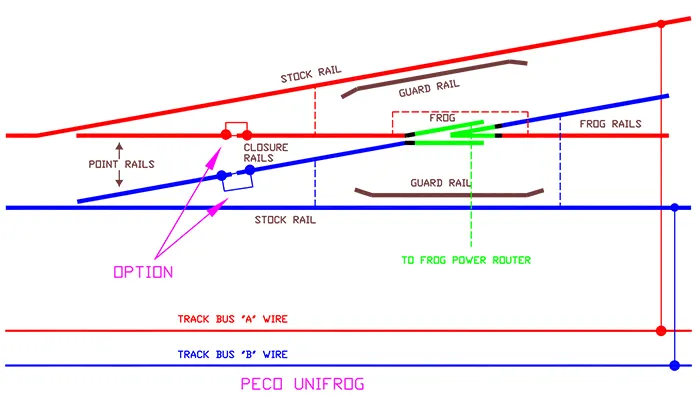
The frog needs to be powered from the turnout motor. Otherwise no special wiring is needed.
Electrofrog
Section titled “Electrofrog”New Style
Section titled “New Style”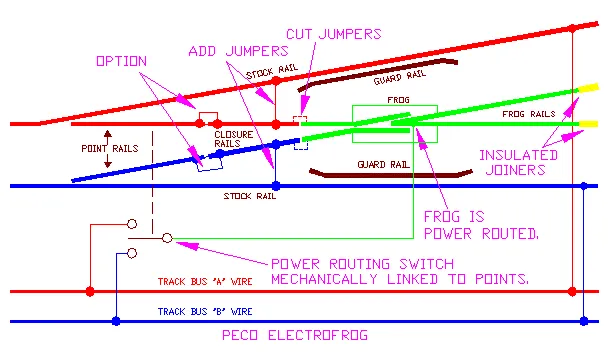
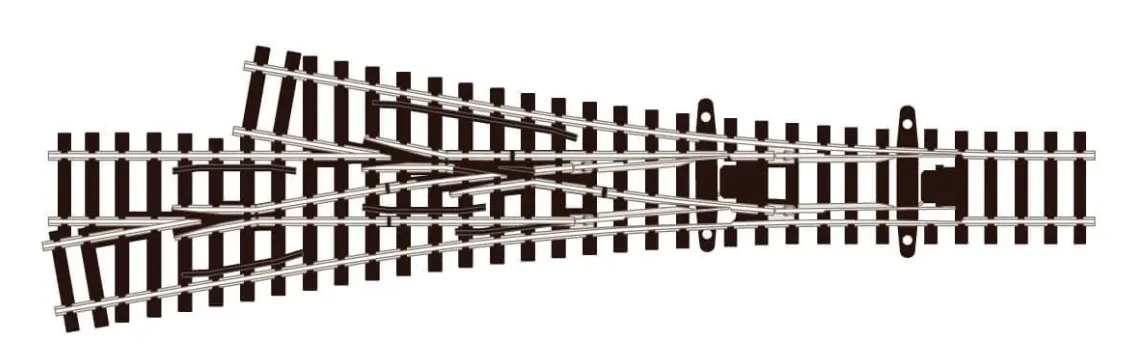
Old Style
Section titled “Old Style”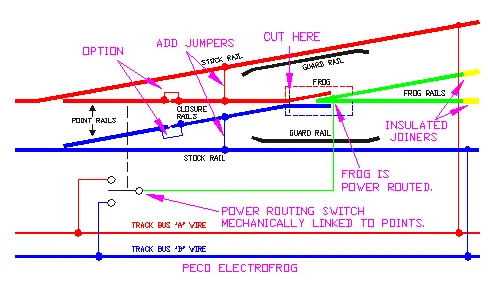
With this design, unless the rails are cut as indicated (“cut here”), derailments can result in short circuits.
Alternatively, power the DCC track for which the turnout is thrown, similar to DC wiring. Cut the jumper wires marked “option” and power the frog and connecting tracks from the turnout motor. Add the two jumpers as indicated in the diagram and do not use isolated joiners. In this case, the rails of the other track are at the same voltage - effectively “off”. Basically the frog section now includes everything to the right of “option” including the tracks connected at the right side.
This should work fine in my application since my only “old styel” turnout serves only two short sidings. Power is only needed for dropping of or fetching cars.
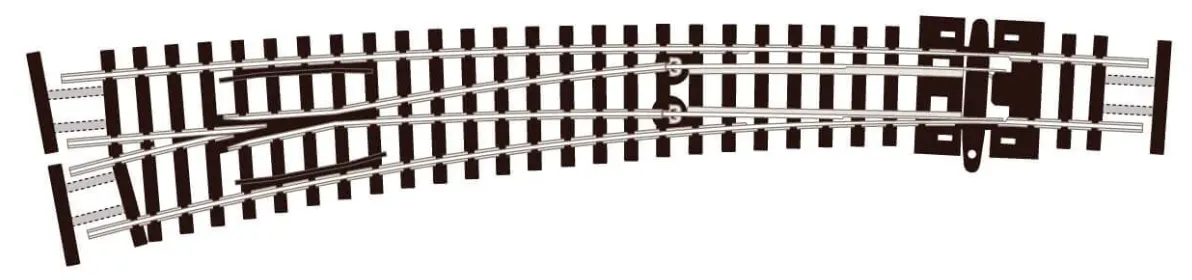
Crossing
Section titled “Crossing”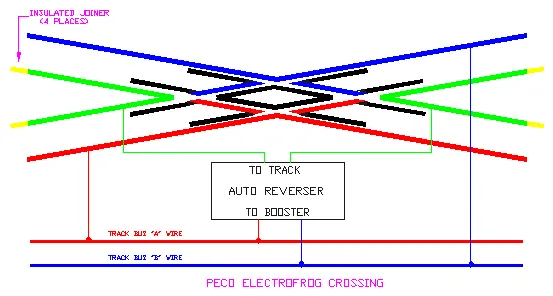
On my layout the two path have opposite polarities. Hence the blue and red tracks need isolated joiners and must be switched.The green rails do not need isolated joiners.